Leonard Lerer, Siti Rabaah and Chiak Yeen Wong, Ecoaccess Sdn Bhd, Malaysia.
The challenge
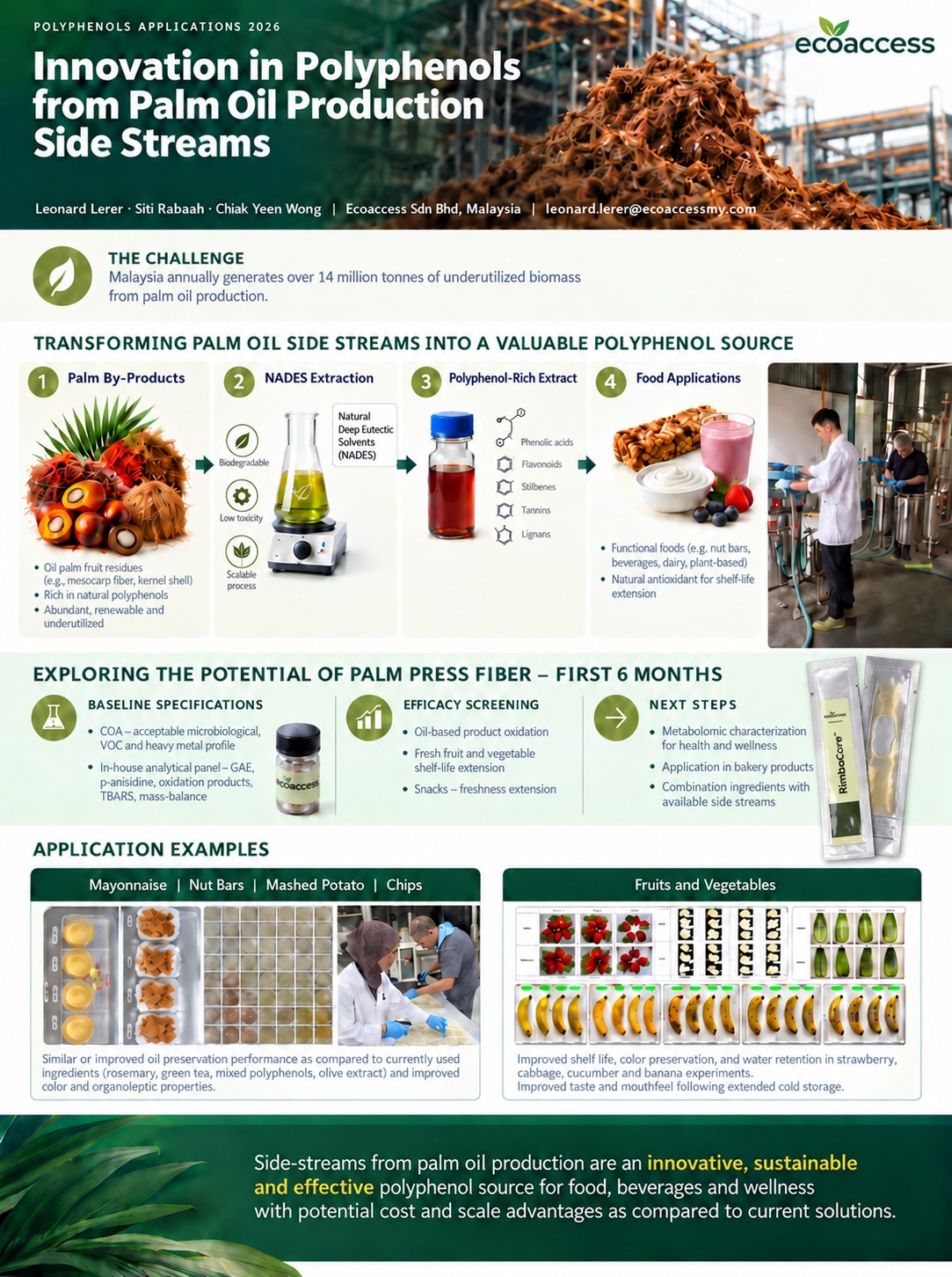
Malaysia annually generates over 14 million tonnes of underutilized biomass from palm oil production.
Transforming palm oil side streams into a valuable polyphenol source
- 1. Palm by-products: oil palm fruit residues (e.g. mesocarp fiber, kernel shell), rich in natural polyphenols, abundant, renewable and underutilized.
- 2. NADES extraction: Natural Deep Eutectic Solvents, a biodegradable, low-toxicity and scalable process.
- 3. Polyphenol-rich extract: phenolic acids, flavonoids, stilbenes, tannins and lignans.
- 4. Food applications: functional foods (e.g. nut bars, beverages, dairy, plant-based) and a natural antioxidant for shelf-life extension.
Exploring the potential of palm press fiber: the first 6 months
- Baseline specifications: COA with an acceptable microbiological, VOC and heavy metal profile; in-house analytical panel covering GAE, p-anisidine, oxidation products, TBARS and mass balance.
- Efficacy screening: oil-based product oxidation, fresh fruit and vegetable shelf-life extension, and snack freshness extension.
- Next steps: metabolomic characterization for health and wellness, application in bakery products, and combination ingredients with available side streams.
Application examples
Mayonnaise, nut bars, mashed potato and chips: similar or improved oil preservation performance compared with currently used ingredients (rosemary, green tea, mixed polyphenols, olive extract), and improved color and organoleptic properties.
Fruits and vegetables: improved shelf life, color preservation and water retention in strawberry, cabbage, cucumber and banana experiments, and improved taste and mouthfeel following extended cold storage.
Side streams from palm oil production are an innovative, sustainable and effective polyphenol source for food, beverages and wellness, with potential cost and scale advantages compared with current solutions.